10 Creative Ideas to Ask for a Review Without Your Email Signature
Your email footer is wallpaper. Put the review ask on the photo they save, the care card they keep, and eight other places they already look — without a discount, a raffle, or anyone hovering.

Your email signature has been asking for a review since 2019. Nobody clicks it. It's sitting under "Sent from my iPhone" like a fire exit sign people walk past on the way to the truck.
That's not an argument against asking. Google's Maps User Generated Content Policy is blunt. Merchants may "solicit or encourage the posting of content that does represent a genuine experience, without offering incentives to do so or attempting to influence the rating or the contents of the review." Asking is allowed. Incentives are not: payment, discounts, free goods or services in exchange for a post. Neither is gating ("only if you were happy"), telling them what to write, or requiring a rating while they're still on the premises.
The signature isn't the problem. Put the ask where they already look.
1. The before/after photo you already text them
You already send the picture. Kitchen backsplash, lawn edge, dented fender, stained carpet. Last line of that text is the ask. They were going to save it anyway.
The review link rides the thing they actually wanted. They're going to show it to a spouse. The ask sits in a thread they won't delete.
After a patio job: "Before and after attached. If you want to leave a Google review, here's the link. Either way, enjoy the space." No speech about stars.
Don't add a discount for posting, and don't write "only if you loved it." That's a prize and that's gating.
2. The care card they actually keep
The sheet that tells them how to live with the thing you just did. Filter changes. Watering. Don't bleach the grout. They keep it. Put the review link under the useful part, not instead of it.
People throw marketing. They tape care cards inside a cabinet door.
A landscaper's one-pager: watering for two weeks, what "dormant" looks like, who to call if a tree leans. Last line: "If the install was worth a review, here's Google." Same pattern on a plumber's water-heater card or a painter's wash-the-walls note.
Don't turn the care card into a raffle ticket.
3. A tag on the thing you just installed
The equipment already has a model and a serial. They'll need that number in three years when it dies on a Sunday. Print a tag with both, plus the review URL next to the serial.
The tag isn't a flyer. It's a record. Furnace closet, under-sink filter, garage door opener.
A 2x3 sticker on the air handler: brand, model, serial, install date, shop name, and "Google review: [short URL]." When they need the serial, they see the link.
Don't hover while they "just tap the stars real quick." Google bans on-site pressure. Leave the tag. Leave the house.
4. The "we were here" door hanger
Not a sales flyer. Not "noticed your gutters." Job done, here's what got finished, here's Google if they want it. Hang it when nobody's home.
It's the only note they'll find after a shift. The review line sits under the work list, not above it in 48-point type.
Copy that doesn't sound like a coupon: "Finished the repair. What got done is on the back. Google review link is here if you want it. Invoice comes by text."
Don't print "leave a 5-star review" or "tell them Mike was great." Google does not want anyone dictating the rating or the contents, including staff names.
5. The warranty packet (or the spare-parts envelope)
The envelope the extra filters, touch-up paint, or spare tiles come in. The folder with the manufacturer warranty. They drop that in a drawer they open when something goes wrong.
Warranty paper outlives the job-day glow. The ask is still sitting there when they remember the install went fine.
A roofer slides a one-pager in with the extra shingles: what got installed, who to call, review URL at the bottom. A salon color-care kit can do the same. So can a dentist's post-op envelope.
Don't write "leave a review and the warranty gets extended." Extra coverage for a post is a service, and Google listed services as incentives.
6. The seasonal reminder you already send
Filter change. Tune-up. Gutter cleaning. HVAC "it's almost summer." This already goes out. One extra line. Not a new campaign.
They open it to see if they need the appointment. The ask is one sentence, the way a P.S. gets read because the rest of it was useful.
Example: "Time to swap the furnace filter (16x25x1). If last season's service was worth a review, here's the Google link. Reply to schedule the tune-up." The filter is the point.
Don't gate it. "If you were happy, leave a review; if not, call" is still selective solicitation. Google's policy says not to discourage negative reviews or only fish for the positive ones.
7. The last three seconds of the walkthrough video
You already film the finished job. Kitchen, bathroom, new lawn, wrap on a work van. Last three seconds: a card with the review URL. No voiceover about stars. Link, then it ends.
They watch it, send it to a sister, watch it again. Nobody is standing in the living room waiting for a rating.
A remodeler ends a 40-second walkthrough on a still: "If you want to leave a Google review: [url]." A detailer after the reveal shot. A landscaper after the drone pass.
Don't script what they should say, and don't hold the phone out at the walkthrough and wait. The video is for later, on the couch, with nobody hovering.
8. A vCard after the first job
Text a contact card so they can save the shop number. The website field is the review link, not the homepage.
People save numbers they might need at 9 p.m. when the water heater makes a new noise. Asked once, in a file they'll keep.
After a first plumbing call: a vCard named like they search ("Riverside Plumbing — 24hr"), phone, Google review URL in the website field. Text: "Card so you've got the number. The link is a Google review if you want one."
Don't make saving the number contingent on a review, and don't add "leave 5 stars to stay on the after-hours list." That's a gate and an incentive stacked on a useful file.
9. The Wi-Fi card in the waiting area
Network name. Password. Then the ask. Sitting room, clinic lobby, folding chair by the service desk. They need the password. They'll look at the card.
They're already unlocking a phone. The review URL is the third line, after the password, same type size. Their device, their chair, not a shop iPad.
A tire shop's laminated card: "Network: ShopGuest / Password: rotate4me / Google review: [url]." Auto body waiting room, salon, vet clinic. Same three lines. No tablet on a stand.
Don't stand over them while they type. Google's policy is plain: merchants should not require or pressure users to leave ratings or write reviews while on the premises. A card on the table is a card. A manager lingering is pressure.
10. The thing they carry out the door
The dry-cleaning hanger. The leftover bag. The pizza box. The shirt bag from alterations. The parts box from the counter. Last object of the visit.
They carry it into a kitchen. A spouse sees it. The ask rides an object that already earned the trip, not a card they'll drop in the lot.
A cleaner prints a review URL on the hanger loop tag, under the "no starch" notes. A bakery stamps the box flap. A florist tucks a card under the vase care line. A pizza shop can do the box; so can a hardware counter with the bag the blades came in. Not a restaurant-only trick.
Don't make it "leave a review to enter" or "10% off next time if you post." The box is not a raffle drum.
The bottom line
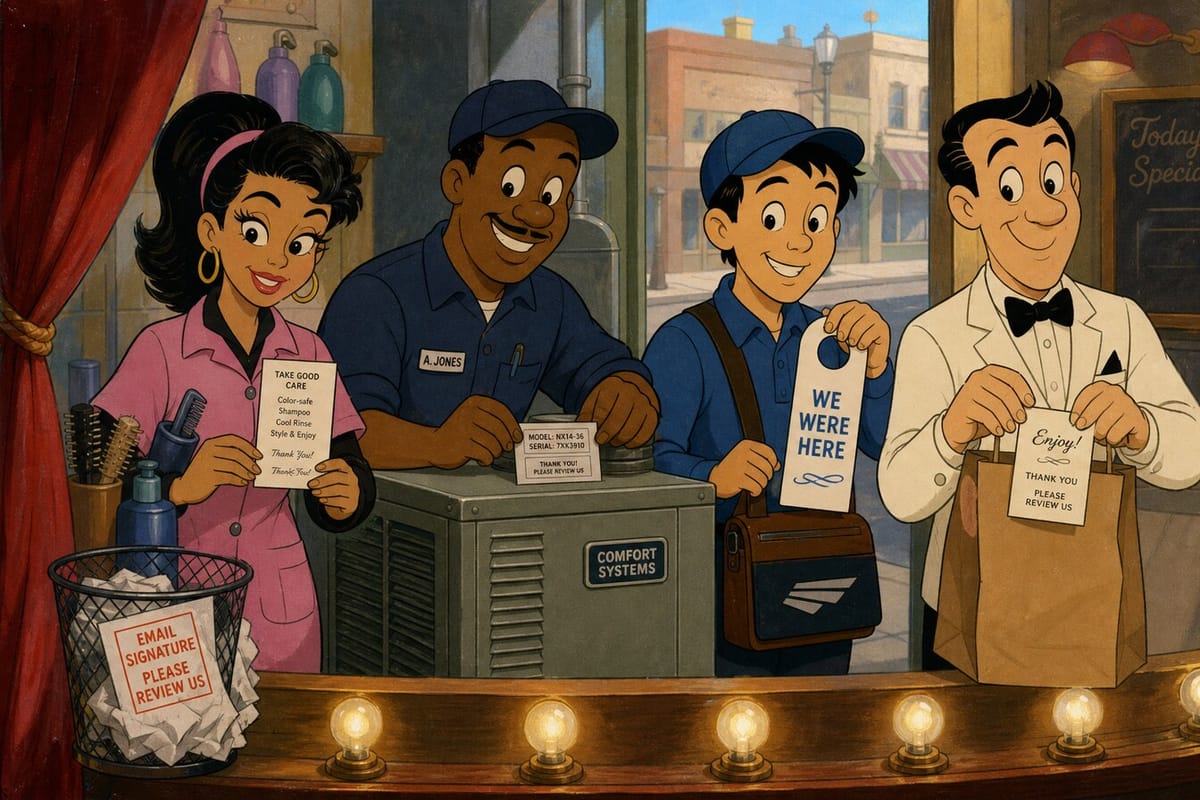
Ask. Google said that's allowed. Don't pay for it, don't gate it, don't script it, and don't stand there while they type. Put the link on something they were going to keep anyway: the photo, the care card, the serial tag, the door hanger, the warranty envelope, the reminder, the video, the vCard, the Wi-Fi card, the bag in their hand.
The signature can stay. It just shouldn't be the whole plan.